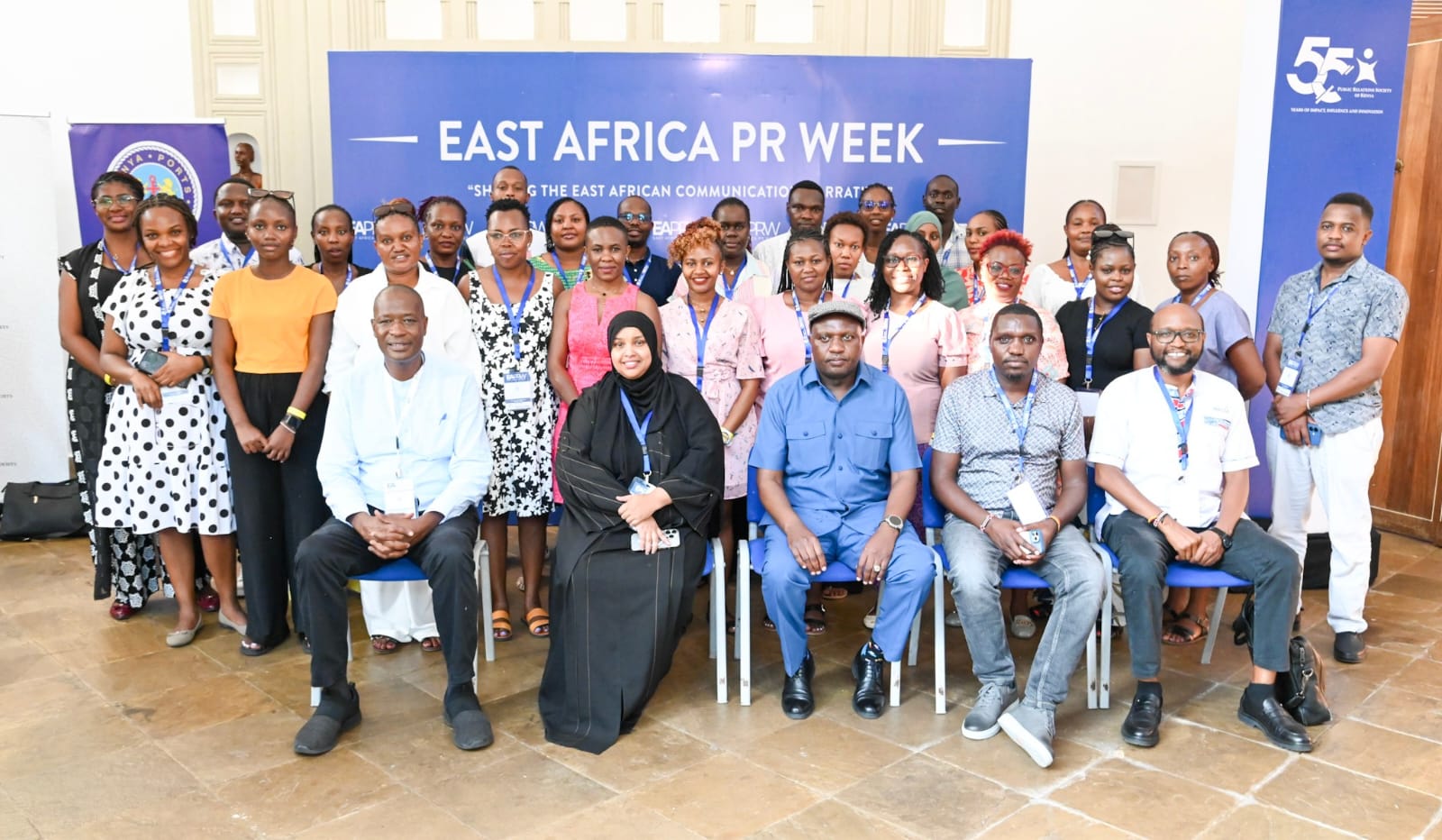
The evolving role of public relations, the growing influence of artificial intelligence (AI), the need to strengthen public trust and a seat at the top table took centre stage as communication leaders urged the profession to rethink its role in protecting and building institutional reputation.
They were speaking at the 5th East Africa Public Relations Week and the 21st Annual PRSK Summit, held under the theme “Reimagining Communication in East Africa” in Malindi. Communication professionals, corporate executives, government officials and media stakeholders filled the hall.
Speakers highlighted the importance of transparency, credible information and accountability, particularly in public institutions. They noted that effective communication should not end with making announcements but should also help the public understand what institutions are doing, what they have achieved and how they are responding to concerns raised by citizens.
The Media Council of Kenya (MCK) was part of the conversation as its Chief Executive Officer, David Omwoyo, took part in a session dubbed “The Business of Reputation: Brand Value, Strategic Positioning and Growth”, examining how credibility drives an institution’s growth.
Setting the tone, Cabinet Secretary for Information, Communications and the Digital Economy William Kabogo said communicators must strike a balance between speed and accuracy, and that when misinformation, disinformation and deep fakes are circulating, truth must come first.
“Accuracy is what fosters trust, and it is what will enable your information that you’re sharing into the world to be trusted and stand the test of time,” the CS said, asking the delegates to leave the conference committed to both.
At the CEO’s Heat Check, Omwoyo drew on Jesus’ question to his disciples, “Who do people say that I am?”, to urge leaders to undertake a “brutal brand audit” — an honest assessment of how others perceive them and their organisations.
Drawing on MCK’s experience, he attributed its growth from 15 staff members to more than 120 to strategic positioning and a team working towards a shared goal. He stressed that reputation is built through an organisation’s actions long before it issues a statement.
“70% of communication takes place before you come in,” he said. “If an organisation is forever defending its work,” he argued, “the problem is not communication. Your problem is elsewhere.”
Kilifi County Governor Gideon Maitha Mung’aro spoke about the value of vulnerability, especially when services fall short or a crisis hits. County leaders, he said, must own up and deal with the public honestly instead of becoming defensive.
“We should be vulnerable enough to accept when we fail and we promise of course to do better,” the Governor said.
PRSK President Arik Karani called for a change in how the profession is seen within corporate structures, arguing that communication belongs at the highest decision-making table.
“Communication is not a support function. It’s a strategic function that supports the CEOs in the delivery of their service,” Mr Karani said.
He encouraged practitioners with executive ambitions to go beyond communication alone and build skills in financial management, people management and emotional intelligence.
The session drew spirited engagement from delegates with one participant enquiring how organisations can maintain internal brand alignment when executive leadership changes and another seeking clarity on the boundaries between executive recommendation and peer accountability within corporate structures.
Overall, the discussions pointed to a profession that must continue to evolve alongside changing public expectations, emerging technologies and institutional demands. Public relations practitioners were encouraged to take a more active role in shaping decisions, fostering meaningful engagement and ensuring that communication contributes to public trust and development.