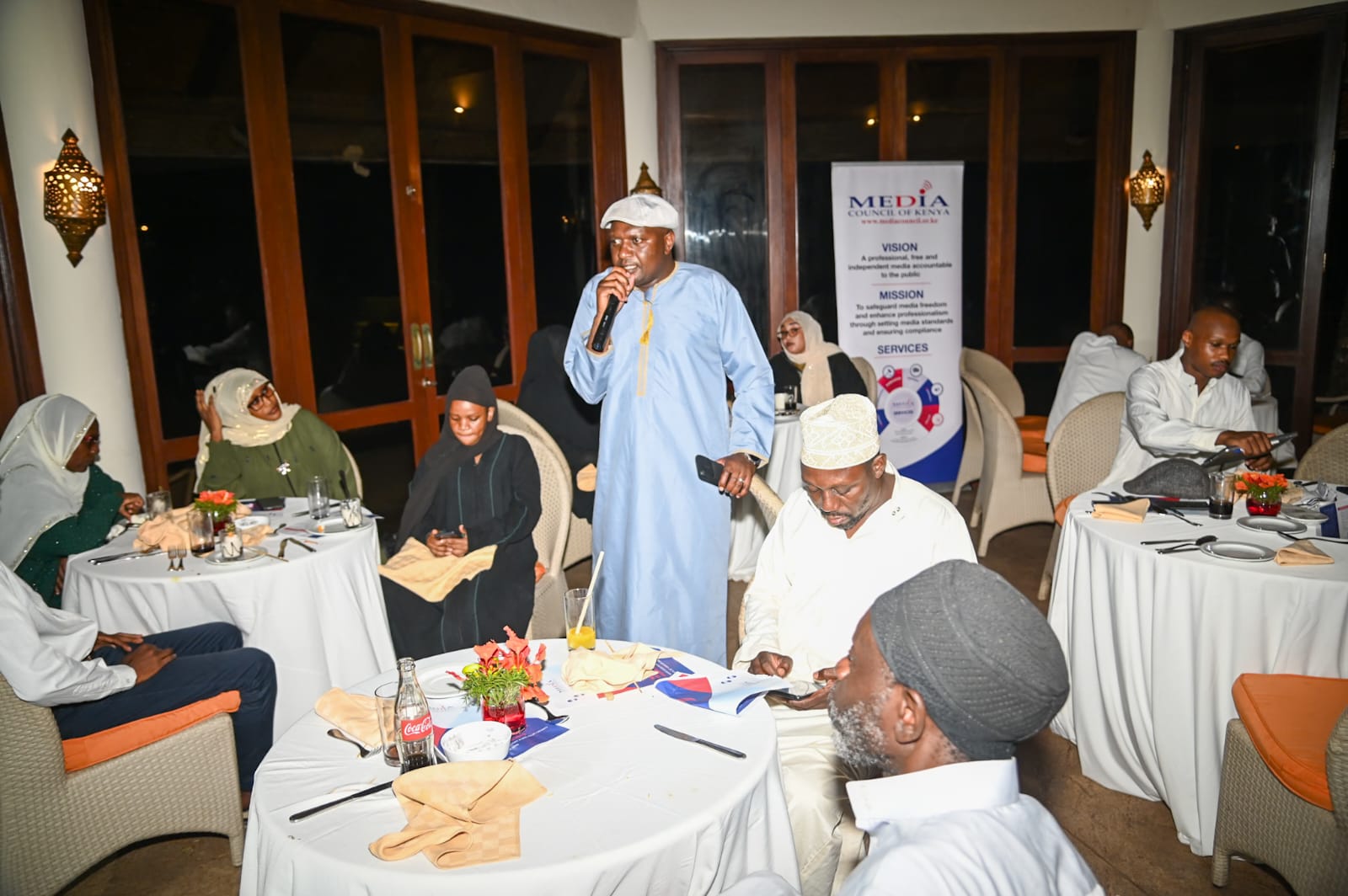
The Chief Executive Officer of the Media Council of Kenya (MCK), David Omwoyo, has urged journalists to allow their faith to shape the quality and integrity of their work in service to society.
Speaking at an iftar dinner hosted by the Council in honour of Muslim journalists in Kilifi County, he stressed that integrity must remain the cornerstone of journalism at a time when public trust is under strain, reminding media workers that accuracy, fairness and accountability are fundamental obligations across both traditional and digital platforms.
"The work you do should be guided by your faith, and that should be reflected in your service to society," he said at the event, described by attendees as historic and the first of its kind for media professionals in the county. Held in Kilifi Town, the dinner brought together journalists from both local and national media houses operating in the area.
Mr Omwoyo used the occasion to announce a series of significant developments at the Council, whilst acknowledging the mounting pressures confronting the industry.
He noted that several media houses had closed, with others at risk, leaving many journalists without work. He encouraged those affected not to abandon their calling.
"Those now without jobs can continue their work in media," he said, revealing a new strategic programme designed to support journalists and content producers transitioning from mainstream newsrooms into independent digital spaces.
Under the new direction, the Council will proactively engage former journalists and independent content creators seeking to venture into podcasting. Those wishing to participate will be required to obtain MCK accreditation and commit to upholding professional standards.
He called on television and radio stations to increase investment in locally produced content, and pledged that MCK would engage major technology companies to promote ethical standards on digital platforms.
He further announced plans to convene a roundtable bringing together journalists from diverse religious backgrounds, and urged all media practitioners to adhere strictly to the revised Code of Conduct for Media Practice.
Attending journalists were both appreciative and candid in their remarks. Several commended the Council for the initiative, with one describing the evening as long overdue.
"This is the first time this has happened for us journalists in Kilifi — no one remembers there are Muslim journalists here," one attendee said, drawing murmurs of agreement from the room.
Participants called on MCK to expand training and empowerment opportunities for media workers in the region, and welcomed greater awareness and enforcement of the Code of Conduct across the industry.
Women journalists raised concerns about harassment and discrimination in newsrooms, calling for stronger safeguards.
Veteran broadcaster Lolani Kalu of Coco FM highlighted the rapid transformation of the media landscape, whilst others spoke candidly about the difficulties faced by Muslim journalists in their professional environments.
Several raised concerns about discrimination, including the damaging perception in some quarters that Muslim journalists are sympathetic to extremism — a characterisation they firmly rejected and urged the industry to confront.
"Muslim journalists are sometimes viewed differently — as promoters of terrorism. This discrimination must stop," one journalist said.
Attendees also encouraged their colleagues to develop programming that addresses pressing societal issues, including challenges facing media practitioners themselves.
The event was widely welcomed as a significant step towards greater inclusion within Kenya's media sector, with participants expressing hope that it would mark the beginning of sustained engagement on matters affecting the profession.