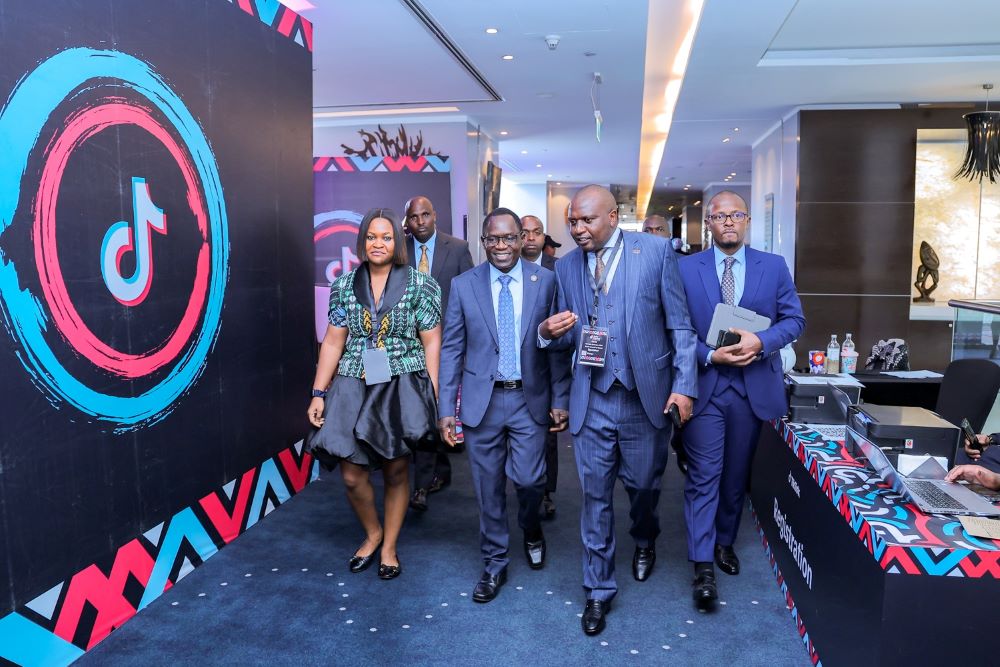
Experts drawn from government, the technology industry, and civil society have called for a deliberate and inclusive approach to artificial intelligence (AI) adoption in Africa, warning that the continent's digital future risks leaving millions behind if policy does not account for local realities.
The call was made during a panel discussion on leveraging technology for societal impact, which brought together senior officials and practitioners to examine the opportunities and risks presented by the rapidly evolving digital landscape.
Principal Secretary for Broadcasting and Telecommunications, Stephen Isaboke, set the tone by emphasising that the government's approach to AI is rooted in facilitation rather than control, describing the technology as a complement to human capability rather than a replacement for it.
"The attitude we should have is that AI is augmented," he said, noting that government officials have already undergone AI training as part of a broader commitment to embedding technology literacy across the public sector. Kenya has further backed this with a national AI draft strategy covering 2025 to 2030, supported by existing AI guidelines, positioning the country as an open and innovation-friendly market. The creative economy, he added, has been among the key beneficiaries, with content creators and entrepreneurs using AI to expand their scale and capabilities in ways previously out of reach.
Isaboke also pointed to the ongoing rollout of digital hubs across wards nationwide, connected to fibre infrastructure and designed to expose children, including those in rural areas, to technology from an early age. The initiative falls under the Digital Superhighway and Creative Economy pillar, one of the government's five flagship development agendas.
"It is slowly digitalising rural areas," he said.
Media Council of Kenya (MCK) CEO David Omwoyo painted a candid picture of a media industry under significant strain. He described the current environment as marked by a collapse of the traditional newsroom model, compounded by journalist overwork, mass layoffs, and growing mental health challenges within the profession.
Omwoyo further pointed to the intensifying disruption between accredited journalists and bloggers, noting that digital creators operating on independent platforms often command far larger audiences and are reshaping the media ecosystem in ways the industry is still working to navigate.
"Most of what we see in the newsrooms is a collapse of the newsroom. We also have overworked our journalists," he said.
He added that the MCK is empowering journalists who have exited newsrooms to establish independent digital platforms, including podcasts, as viable income-generating ventures — a move he framed as a necessary evolution in a media economy that has fundamentally shifted.
Head of Outreach and Partnerships for TikTok Sub-Saharan Africa Duduzile Mkhize outlined how the platform is approaching responsible AI use at scale. TikTok applies community guidelines across its creator base to ensure content compliance and has developed dedicated AI principles governing how the technology is deployed internally, from recommendation algorithms to content moderation.
Her remarks underscored a broader industry shift toward transparent and accountable AI governance as the creator economy continues to expand across the continent.