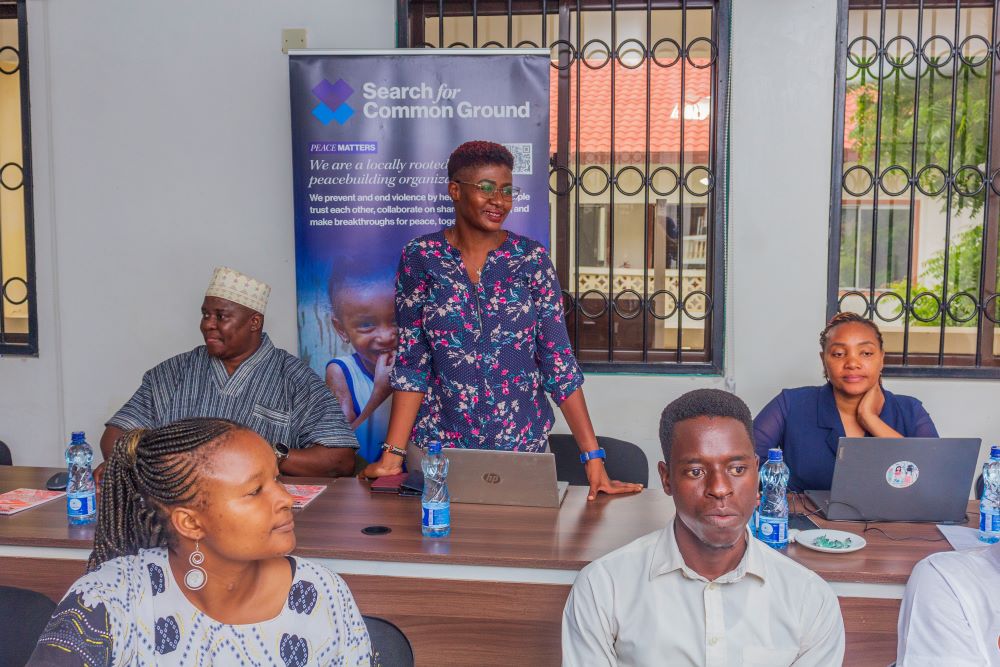
Responsible digital engagement and robust safeguards online featured prominently in discussions on Kenya’s evolving media ecosystem during a session hosted by the Media Council of Kenya (MCK).
Speaking at a multi-stakeholder convening organised by Search for Common Ground in Kilifi County, MCK Mombasa Regional Coordinator noted that the rapid expansion of social media has fundamentally reshaped journalism, public discourse, and civic participation.
She acknowledged that digital platforms have broadened access to information and amplified diverse voices. However, she warned that the growth of digital footprints must be matched by heightened awareness, professionalism, and accountability.
“As our online presence grows, so does our responsibility. Social media is no longer peripheral; it is central to how news is produced, shared, and consumed. That shift requires ethical judgement, care, and strong digital safety awareness,” she said.
She observed that while online platforms create new opportunities for engagement, they have also intensified cases of Technology-Facilitated Gender-Based Violence (TFGBV), particularly targeting women journalists and public figures. Safeguarding journalists in digital spaces is therefore essential to protecting press freedom and democratic participation.
“Coordinated online harassment, hate speech, and intimidation disproportionately affect women journalists. When left unchecked, such attacks harm individual well-being and weaken the diversity of public discourse,” she added, emphasising that digital safety must be treated as both a professional and institutional priority.
She highlighted ongoing collaboration between MCK and stakeholders to strengthen ethical standards, promote digital literacy, and enhance protective mechanisms for media practitioners navigating online spaces.
Search for Common Ground’s Senior Media Officer, Dominic Mwambui, stressed the importance of structured and sustained collaboration, noting that online harms intersect with broader issues of social cohesion, youth radicalisation, and democratic stability.
The meeting included representatives from the National Cohesion and Integration Commission (NCIC), the Directorate of Criminal Investigations (DCI), and the Office of the Director of Public Prosecutions (ODPP), who explored links between TFGBV and violent extremism.